
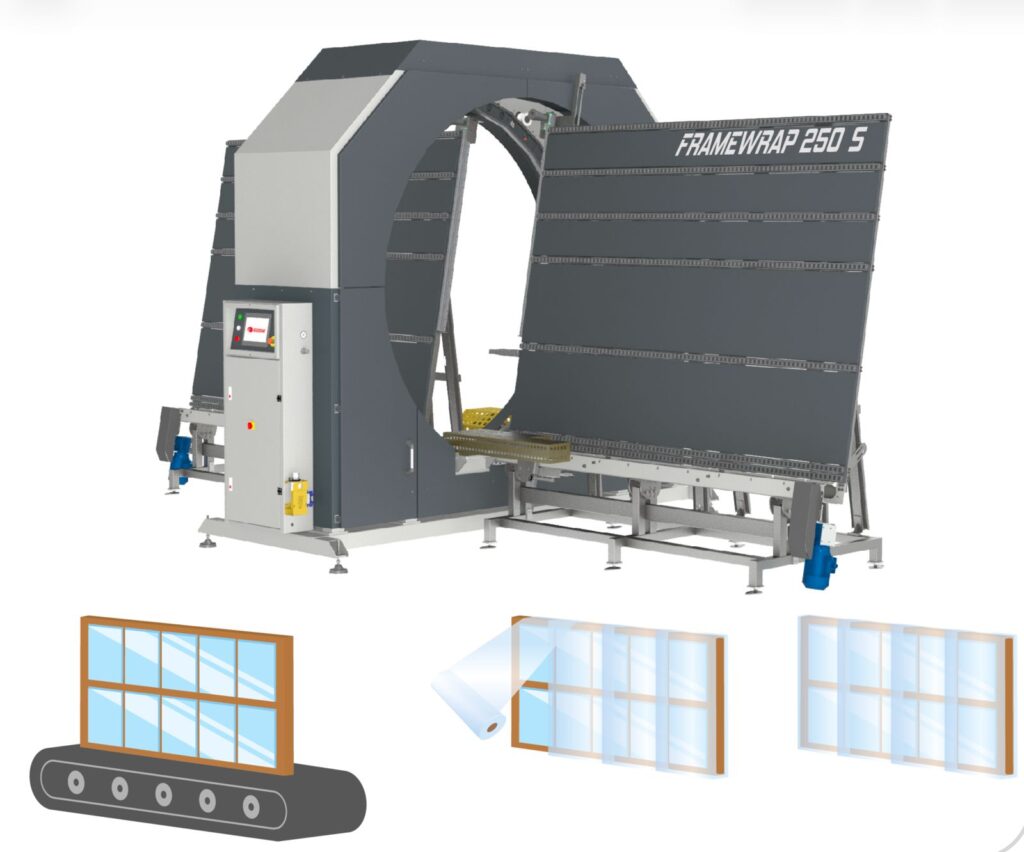
In the competitive world of window and door frame manufacturing, the journey from the assembly line to the customer’s doorstep is fraught with risks. A minor abrasion during transit or a surface defect from improper handling can turn a high-value product into an operational loss. As production speeds increase globally, the packaging bottleneck has shifted from a manual task to a sophisticated engineering challenge.
The Shift Toward Total Closure
The industry standard is rapidly evolving. Manufacturers are moving away from manual, inconsistent wrapping methods that often leave vulnerable edges exposed. The focus now is on “total closure”—a packaging methodology that guarantees structural integrity from the factory floor to the construction site. By utilizing high-tension orbital wrapping systems, producers can shield profiles not just from environmental contaminants like dust and moisture, but from the mechanical stresses that occur during heavy-duty logistics.
Technical Excellence: The Framewrap 250 S
One of the most notable systems currently gaining traction in European and international manufacturing hubs is the Framewrap 250 S. Engineering teams focusing on throughput optimization often cite this model as a benchmark for horizontal stretch wrapping.
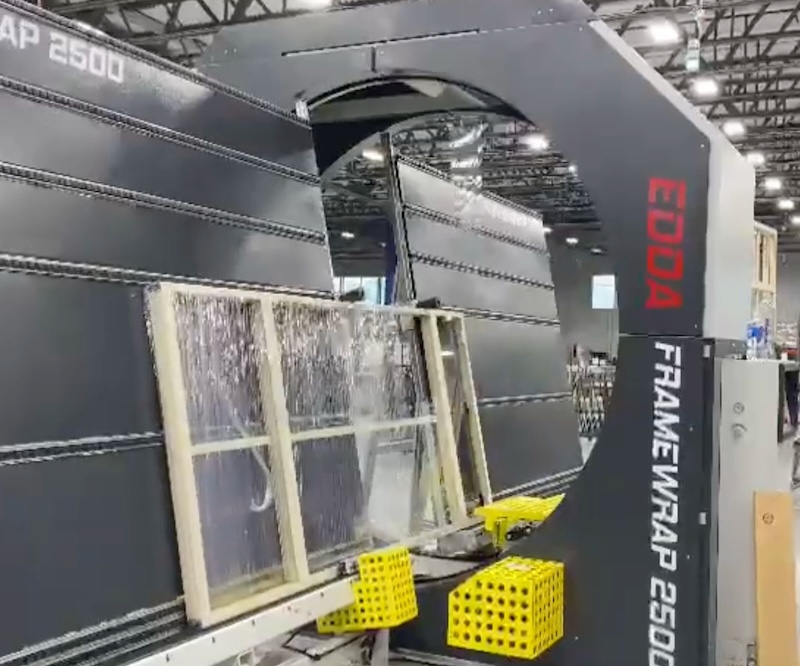
Whether you are looking for a reliable window wrapper for PVC profiles or a specialized automatic profile wrapping solution for wooden frames, the system’s design philosophy prioritizes two critical aspects of modern manufacturing:
- Material Versatility: The horizontal wrapping machine maintains consistent film tension to avoid frame deformation, regardless of whether the product is an aluminum window or a door profile.
- Workflow Integration: As a high-efficiency window wrapping machine, its automated configuration allows for seamless integration into existing conveyor setups, effectively eliminating manual touchpoints that often lead to workplace injuries or process bottlenecks.
The value proposition here is clear: it is about minimizing material wastage while maximizing protection through automated industrial wrapping techniques. For companies aiming to scale, the implementation of such technology acts as a direct lever for improving ROI by reducing damage-related returns.
Looking Ahead: Why Packaging ROI Matters
As we navigate towards 2027, the export market will continue to prioritize manufacturers who can guarantee “pristine delivery.” Advanced profile packaging is no longer an optional backend operation; it is a critical component of the supply chain that directly impacts brand reputation.
For those currently evaluating their production lines or looking to transition from manual to automated processes, technical consultation is highly recommended. Understanding the specific geometry of your product line is the first step in selecting the right orbital stretch wrapper.
If you are looking for specific guidance on how to integrate high-speed wrapping solutions into your facility, you can reach out for technical advice at info@eddapack.com. For a broader view of current industrial packaging trends and available machinery, visit eddapack.com to explore the technical specifications that are shaping the industry today.