
“How much does a horizontal stretch wrapper cost?” is one of the first questions buyers ask, and one of the hardest to answer in a single number. Two machines that look alike in a brochure can be far apart in price, because the price follows a handful of design choices. Some of those choices also set the running cost for the next ten years.
This guide covers the factors that move the purchase price of a horizontal, or orbital, stretch wrapper up or down. It then covers the running costs that often matter more than the purchase price.
1. Product size and ring opening
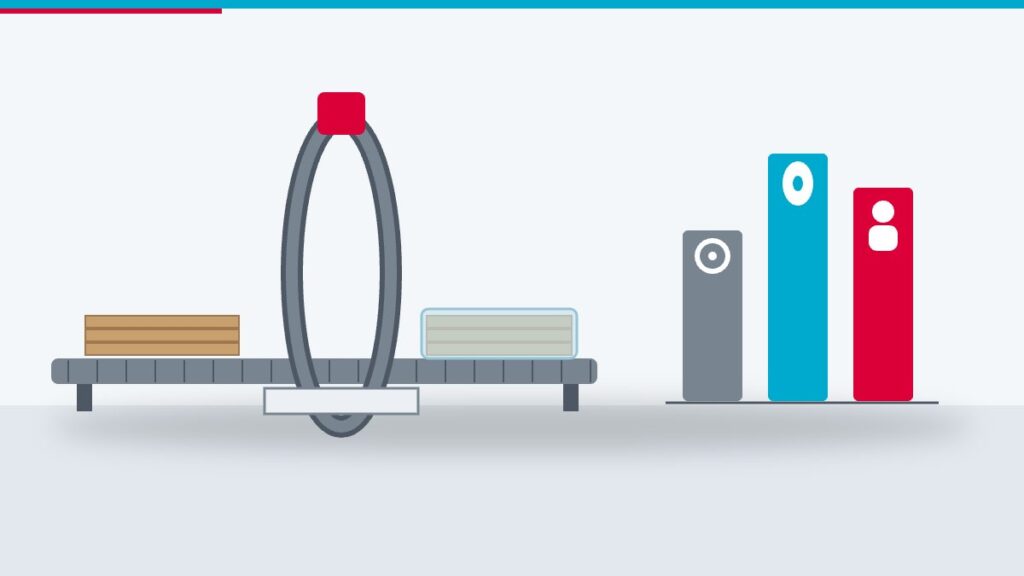
The ring opening, meaning the largest width and height that can pass through the ring, is the first cost driver. A larger ring needs a larger frame, a heavier slewing ring, stronger drives and longer conveyors. Machines for small profiles and mouldings sit at the lower end of the range. Machines for doors, panels, bed bases and cabinets sit in the middle. Machines for large panels and heavy, long loads sit at the top.
Buyers often specify a ring for the largest product they might ever ship. If that size is only a small share of your volume, check whether a smaller ring covers most of it. The rare oversized item can often be handled another way.
2. Level of automation
The second driver is how much the operator does:
- Semi-automatic: the operator feeds the product and starts the cycle; film is cut and tucked by hand.
- Automatic: powered infeed and outfeed conveyors, automatic start and stop by sensors, automatic film cutting and holding.
- Line-integrated: the wrapper receives products from an upstream machine and passes them on, with signals exchanged with the rest of the line.
Each step adds sensors, drives, conveyor length and control software. It also removes labour, which is where the payback comes from.
3. Film delivery: brake tension or powered pre-stretch
Simple film carriages use a brake to hold back the film, so the film is stretched by the product itself. Powered pre-stretch carriages stretch the film between two rollers turning at different speeds before it reaches the product. The powered carriage costs more, but it applies less film by weight for the same coverage and holds tension more consistently on light or delicate products.
This is the clearest case where a higher purchase price can lower the total cost, because film is the largest running cost of most wrappers.
4. Protection options
Many furniture, door and panel lines add a protection step before the film:
- a bubble wrap or foam unit that lays protective material on top and bottom of the product;
- corner or edge protectors;
- top covers, labelling or printing units.
A combined bubble and stretch machine can replace a separate manual station, but it is a larger machine with more material handling. We looked at when it makes sense in bubble wrap and stretch film in one pass.
5. Speed and drive design
Ring speed (rpm) and conveyor speed (m/min) set throughput. Faster rings need better balancing, stronger bearings and better guarding. Some newer designs drive the ring directly instead of through belts, which affects both price and maintenance. Ask for real output on your own product mix rather than the maximum ring speed.
6. Electrical specification and certification
The machine must match the plant’s supply voltage and frequency, and the local safety and electrical rules. Machines for North America often need a different voltage and components with North American approvals. Machines for Europe need CE marking. Changing these late in a project costs more than specifying them at the start.
7. Delivery, installation and support
Freight, installation, operator training and a recommended spare parts kit belong in any price comparison. So do warranty terms, remote support and how quickly a technician can reach your plant. Two quotes are only comparable when both include the same scope.
The running cost: film and labour
Over a machine’s life, film and labour usually cost more than the machine itself. A simple way to estimate film cost per product:
- film cost per product = film weight per product × film price per kg (or per lb);
- film weight per product depends on product perimeter, length, overlap between wraps and film thickness;
- pre-stretch lowers the weight per product, because each metre of film from the roll covers more surface.
Film thickness matters as much as pre-stretch. Many horizontal wrappers run film in the 23–35 micron range (roughly 90–140 gauge); a thicker film than the product needs adds cost on every piece. We will cover gauge and micron in a separate guide.
Labour is the other half. Compare the number of people at the end of the line today with the number after automation, over all shifts. Then add the savings from fewer damage claims, which are harder to measure but often significant in furniture and door shipping.
Questions to ask before you buy
- What is the smallest and largest product the machine can wrap, and what ring opening does that need?
- Which steps are automatic: infeed, start/stop, film cut, film hold, outfeed?
- Does the film carriage pre-stretch film, and at what ratio?
- What film width, roll diameter, core size and thickness does it take?
- What is the real output per hour on my product?
- Which voltage, frequency and certifications are included in the price?
- What does the quote include for freight, installation, training and spare parts?
- How much film does one of my products use, and can the supplier show it on a trial or video?
Related reading
- Orbital Wrappers
- Bubble Wrap and Stretch Film in One Pass
- Automated Furniture Packaging Lines Guide
- Door, Window and Profile Packaging Guide
Sources and further reading
- Stretch wrap (Wikipedia): materials, stretch levels and wrapper types
- How to choose an orbital wrapping machine: a buying guide
- Orbital vs turntable stretch wrapper: which one for long products?
- Horizontal stretch film wrapping machines: model overview
- Olympia 150 S automatic horizontal orbital wrapper: technical data
- Spinner 1000 S automatic horizontal orbital wrapper: technical data